.svg)


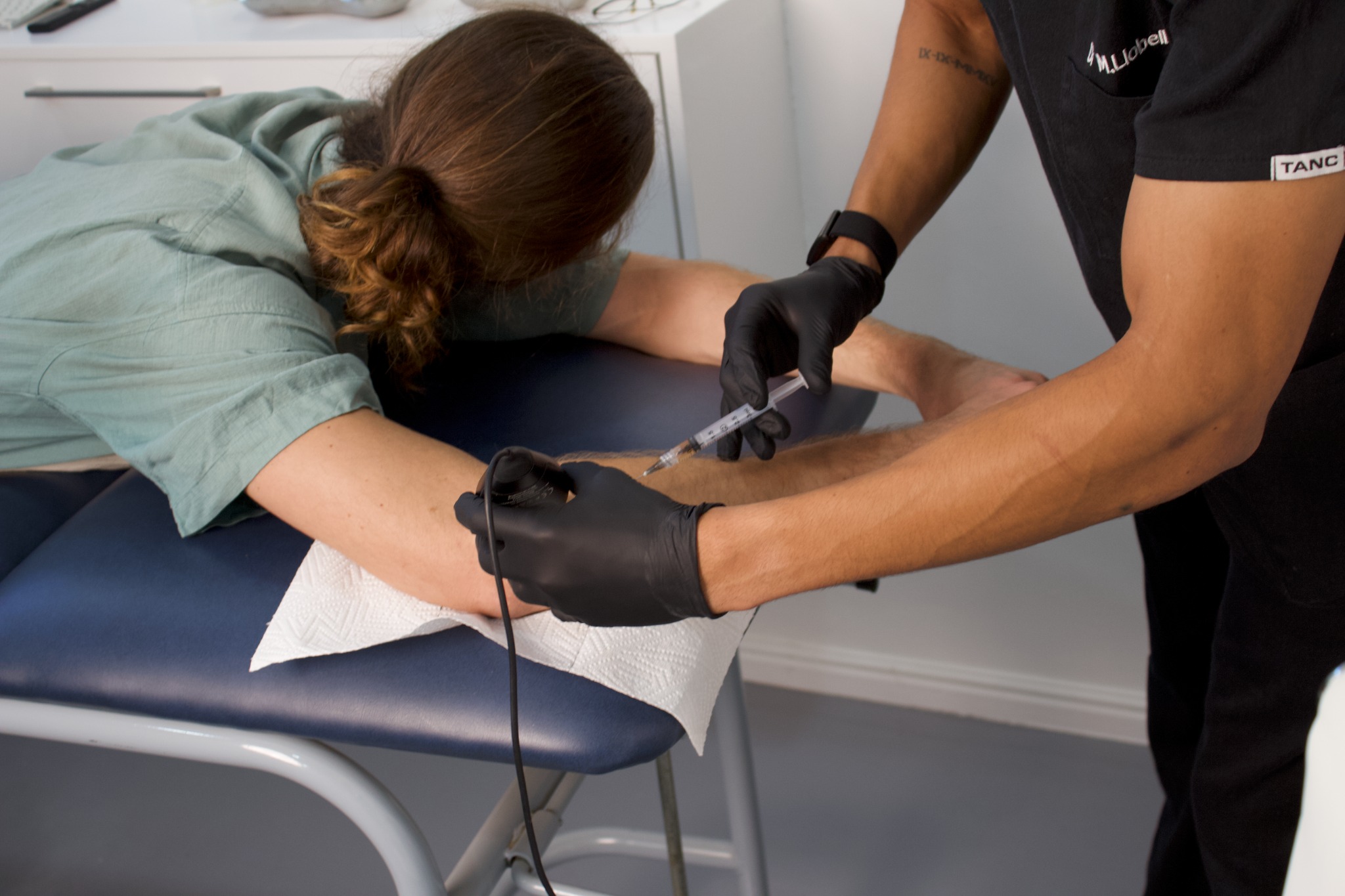
You have a knee that complains every time you take the stairs. A shoulder that has suddenly developed opinions about how you sleep, or perhaps joint pain is stopping you from exercising the way you used to.
Then someone mentions an injection.
The problem? There is more than one type, and they do very different things. Platelet-rich plasma injections and cortisone injections are both used in medicine, particularly when managing certain musculoskeletal problems, but they are not interchangeable. PRP is also used in aesthetic medicine, where cortisone generally has a very different role.
So, before you start mentally preparing yourself for a needle, it helps to understand what is actually inside it, why it might be recommended and what you can realistically expect afterwards.
What Are Platelet Rich Plasma Injections?
Platelet-rich plasma, usually shortened to PRP, is prepared using a small sample of your own blood. The blood is placed in a centrifuge, which separates and concentrates the platelets before the prepared plasma is injected into the treatment area.
Platelets are probably best known for helping blood clot, but they also contain growth factors and proteins involved in the body's repair processes. This is why platelet-rich plasma injections and cortisone injections work differently from the outset.
Rather than introducing a corticosteroid medication, PRP uses a concentrated component of your own blood. At Fluid Medical, PRP is used within both sports medicine and aesthetic treatments, depending on the patient's concern and clinical assessment.
What Are Cortisone Injections?
Cortisone injections contain a corticosteroid medication designed to reduce inflammation.
When inflammation is contributing to pain around a joint, tendon or other structure, a doctor may recommend a cortisone injection as part of a broader management plan. It can be used for certain conditions affecting areas such as the knee, shoulder, hip and other joints.
This is one of the biggest differences between platelet-rich plasma injections and cortisone injections. Cortisone primarily aims to reduce inflammation, whereas PRP is intended to support the body's healing response.
That does not mean one is automatically "better". The appropriate option depends on what is causing the symptoms, how long they have been present, what treatments you have already tried and what your doctor finds during an assessment.
How Do PRP and Cortisone Differ for Joint Pain?
This is usually the question people actually want answered.
When you are in pain, you are not particularly interested in an academic showdown between two syringes. You want to know which treatment makes sense for your knee, shoulder or ankle.
With platelet-rich plasma injections and cortisone injections, the decision starts with the diagnosis.
Cortisone may be considered when inflammation is an important contributor to symptoms. PRP may be considered for certain tendon, ligament or joint problems where supporting tissue repair is part of the treatment approach.
Fluid Medical discusses PRP in its article PRP Therapy: A Regenerative Approach to Pain and Injury, including its potential use for conditions involving tendons, ligaments and joints.
The important bit? Do not choose an injection based purely on where it hurts. "My knee hurts" is a symptom, not a diagnosis.
Which Conditions May Be Treated With These Injections?
The use of platelet-rich plasma injections and cortisone injections varies according to the condition being treated.
PRP may be considered in the management of certain:
- Tendon injuries
- Ligament injuries
- Joint problems
- Overuse injuries
- Sports-related injuries
- Osteoarthritis-related symptoms
Cortisone injections may be considered when inflammation is contributing to joint or soft-tissue pain, including some forms of arthritis, bursitis and other inflammatory conditions.
However, not every painful joint needs an injection. Your doctor may recommend activity modification, rehabilitation, physiotherapy, medication or further investigation instead.
Fluid Medical's Sports Medicine service includes assessment and management of acute and ongoing sports injuries, including joint, tendon and ligament concerns.
How Quickly Do They Work?
Here is another major difference between platelet-rich plasma injections and cortisone injections: the timeline.
Cortisone is used to reduce inflammation and may provide symptom relief relatively quickly for
some patients. The response and duration of relief vary depending on the condition and the individual.
PRP generally works on a different timeline. Because the treatment is intended to stimulate and support biological repair processes, improvement is not necessarily immediate. Some people may experience temporary discomfort after treatment before noticing changes over the following weeks.
In other words, PRP is not usually the injection you have at lunchtime before expecting your troublesome knee to forget the entire incident by dinner.
What About PRP for Skin?
This is where platelet-rich plasma injections and cortisone injections head in very different directions.
PRP is also used in aesthetic medicine to support skin rejuvenation. The prepared plasma can be introduced into targeted areas of the skin, where its growth factors are used with the aim of supporting collagen production and tissue renewal.
PRP may be considered by adults concerned about:
- Fine lines
- Skin texture
- Loss of firmness
- Dull-looking skin
- Certain signs of skin ageing
Fluid Medical offers PRP treatments as part of its aesthetic medicine services.
Cortisone injections, by contrast, are not a comparable skin rejuvenation treatment. Corticosteroids do have dermatological uses, but they should not be viewed as an alternative to aesthetic PRP.
So if you are comparing platelet-rich plasma injections and cortisone injections because you want to improve skin quality, you are not really comparing two competing aesthetic treatments.
Is PRP the Same for Skin and Joint Problems?
The basic principle of preparing platelet-rich plasma from your blood remains similar, but the reason for using it is different.
For musculoskeletal concerns, PRP may be used in relation to injured or irritated tissues such as tendons or joints. In aesthetics, treatment is directed towards the skin and its appearance. This is why platelet-rich plasma injections and cortisone injections should always be discussed within the context of what you are actually trying to treat.
Aesthetic goals and sports injury management are two very different conversations, even when PRP appears in both.
What Should You Expect Before an Injection?
Before considering platelet-rich plasma injections and cortisone injections, expect your doctor to ask questions. Quite a few of them.
Where does it hurt? When did it start? Was there an injury? What makes it worse? Have you had imaging? What treatments have you already tried? What medication are you taking?
For joint pain, a physical examination may be necessary, and imaging may sometimes be reviewed or requested. Fluid Medical's blog on Sports Injury Assessment & Management explains why identifying the injured structure and understanding training or movement patterns can influence treatment decisions.
For aesthetic PRP, the discussion will instead focus on your skin concerns, medical history, expectations and whether PRP is appropriate for the area you would like treated.
Are There Risks or Side Effects?
No injection is entirely risk-free.
Because PRP is produced from your own blood, allergic reactions to the injected plasma are less of a concern. However, treatment can still cause temporary pain, swelling, bruising or discomfort around the injection site. Infection and other complications are possible with any injection procedure.
Cortisone can also cause temporary discomfort at the injection site. Depending on the location and individual circumstances, other effects may include changes to nearby skin or tissue, and repeated corticosteroid injections may not be appropriate for every patient.
Your medications and medical history matter too. Before receiving platelet-rich plasma injections and cortisone injections, tell your doctor about medications and supplements you take, allergies, previous injections and relevant medical conditions.
And please do not quietly stop prescribed medication because an internet article told you PRP was happening on Thursday. Medication changes should be discussed with your treating doctor.
Which Injection Is Better?
Neither wins a universal trophy. The choice between platelet-rich plasma injections and cortisone injections depends on the diagnosis, treatment goal and individual patient.
If reducing inflammation is the priority, cortisone may be considered. If a particular injury or joint condition may benefit from a regenerative approach, PRP could be discussed. If your concern is skin quality, aesthetic PRP is an entirely separate use of the treatment.
The better question is not, "Which injection is better?" It is, "Which treatment is appropriate for what I am trying to address?"
That small change in wording can lead to a much more useful conversation with your doctor.
Making Sense of Your Options
Joint pain can make everyday life surprisingly irritating. Getting out of the car becomes a manoeuvre. Stairs become negotiations. Your weekend run starts looking considerably less appealing. Skin concerns are different, but the same principle applies: treatment should start with understanding what you want to address and whether the proposed procedure is suitable.
Although platelet-rich plasma injections and cortisone injections can both have a place in medical care, they work differently and are used for different reasons. A clinical assessment can help determine whether an injection is appropriate at all and, if so, which approach may be considered.
If you are experiencing persistent joint pain, recovering from a sports injury or considering PRP for your skin, Fluid Medical can assess your concerns and discuss the available options with you.
Because when it comes to platelet-rich plasma injections and cortisone injections, knowing what is actually being treated should come before deciding what goes into the syringe.
Article Author

.svg)
.svg)
.svg)